

The aim of the ‘Three Colours 2.023’ project is to attempt to demonstrate the relevance of the slogans of the French Revolution (Liberty, Equality, Fraternity) in the contemporary world, particularly in relation to the current geopolitical context and the socio-political situation in Europe.
The photographic works, in their conception of Krzysztof Kieslowski’s film trilogy Three Colours, seek to draw attention to the persistence and relevance of these ideas in the face of contemporary challenges, particularly the war in Ukraine, whose media symbol is the ruined city of Bachmut.
The use of modern tools such as AI image generators and artificial intelligence to assist in the generation of images and editing of content is a deliberate attempt to explore contemporary technologies and attempt to demonstrate their role in contemporary artistic creation.
2.023 is a combination of 2.0, as the name of the new version, and the year 2023.
The French Revolution was an important moment in French history and had a profound impact on the development of democratic ideas around the world. The three main slogans of this revolution – liberty, equality and fraternity – can be associated with the colours of the French flag: blue, white and red.
Liberty (liberté) was one of the main aims of the French Revolution. The revolutionaries wanted to free themselves from tyranny and feudal privilege. The colour blue, which symbolises the sky, reflects the desire for freedom, which, like the sky, is unlimited.
Equality (égalité) was another important slogan of the French Revolution. The revolutionary movement sought to abolish social inequalities and privileges that burdened the poor. The colour white symbolises purity, simplicity and equality, which were the aspirations of the revolutionaries.
Fraternity (fraternité) is the idea of social solidarity and unity that was an important goal of the French Revolution. It sought to create a society in which all citizens were equal and lived in harmony. The colour red, which symbolises love, passion and strength, reflects the quest for unity and fraternity.
These three slogans of the French Revolution and the colours of the French flag are inextricably linked and form the basis of the ideas that emerged from this important period in history.
„Liberté, égalité, fraternité, ou la mort”
(Liberty, Equality, Fraternity or Death)
The fourth, often forgotten slogan of the French Revolution is ‘Death’ (morte). Although it is no longer widely used or accepted in a modern context, it is possible to interpret its meaning today. In the context of the French Revolution, ‘Death’ symbolised the willingness to sacrifice oneself in order to achieve liberty, equality and fraternity. In modern times, it can be interpreted as an exhortation to throw off limitations, adversity or oppression, and to fight against injustice and intolerance. It can symbolise the courage to strive for change and the willingness to take risks in order to achieve a better future for society as a whole. However, it is important to remember that the interpretation of this slogan must take into account the context and always seek peaceful and just solutions.
The French Revolution was not just about 18th century France. It had an enormous impact on the culture of Europe. Its slogans helped spread the ideas of democracy, human rights and social equality. Its influence can also be seen in the following areas:
1. Politics and systems: The French Revolution overthrew the monarchy and established the First French Republic. Its impact on the political culture of Europe was significant, inspiring the emergence of democratic movements and the struggle for civil rights in other countries. The introduction of republicanism as a form of government was of great importance for the political transformation of the country and other European countries.
2. Art and literature: The French Revolution played an important role in the development of modern art and literature. Revolutionary events were the subject of many artistic and literary works that sought to promote revolutionary ideas and highlight social inequalities. Art of the period often used symbols of revolution, such as the Phrygian cap or allegories of liberty, to express opposition to authoritarian regimes and social injustice.
3. Political literature: The slogans of the French Revolution influenced the development of political literature in Europe. Writers and philosophers such as Jean-Jacques Rousseau and Emmanuel-Joseph Sieyès explored issues of liberty, equality and fraternity in their works. Their ideas played a key role in shaping the political and social thought of the time.
4. National anthem: The French Revolution contributed to the creation of the French national anthem, ‘La Marseillaise’. This well-known piece of music became a symbol of the struggle for freedom and independence not only in France but also in other European countries.
5. Human rights: The French Revolution played a key role in the formulation of the Declaration of the Rights of Man and of the Citizen, which recognised the rights and freedoms of every human being. This declaration was important for the development of human rights in Europe and around the world, and became the basis for many later international documents, such as the United Nations Universal Declaration of Human Rights. The idea of equality and the protection of individual rights contained in these documents had a huge impact on the culture of human rights in Europe and the promotion of social justice.
6. Flag symbolism: The slogans of the French Revolution were also immortalised in the symbolism of flags. Coloured flags such as the French flag (blue, white and red) were widely used as symbols of the struggle for freedom, equality and fraternity not only in France but also in other European countries. These colours became a trademark and often accompanied movements for freedom and democracy.
7. Breaking tradition: The French Revolution brought with it revolutionary changes in the sphere of culture and society. These changes included the rejection of traditional institutions, such as the Catholic Church, and the introduction of new ideas, such as secularisation and the separation of state and ecclesiastical power. This affected the entire structure of European society and culture, and had long-lasting effects on the development of attitudes and values in society.
The French Revolution had a lasting impact on the culture of Europe, not only during the revolutionary period itself, but also for a long time afterwards. Its slogans and ideas continue to shape political, social and cultural discourse, and their influence can be seen in many aspects of contemporary Europe. Hence the attempt in this series to give these ideas a contemporary content.
The four slogans of the French Revolution – Liberty, Equality, Fraternity or Death – are directly relevant to the context of the war in Ukraine, especially in light of the unimaginable crimes and suffering of the civilian population.
Liberty is a fundamental aspiration for the people of Ukraine, who wish to live in peace and without fear for their lives and safety. The current events of war deprive people of their basic rights and freedoms, and the idea of freedom is present in their desire to rebuild a life of normality.
Equality is undoubtedly an important aspect for the people of Ukraine in the face of injustice and violence. Equality means ensuring dignity, respect for human rights and equal opportunities for all, regardless of origin, creed or nationality. The struggle for equality is linked to the desire to rebuild devastated communities and to ensure that all citizens are treated fairly.
Fraternity refers to the need for solidarity and unity among people, especially in difficult times of conflict. In the face of unimaginable crimes and suffering, international solidarity and support are essential. Fraternity symbolises the need for mutual aid, reconstruction and support for the victims of conflict, as well as the desire for reconciliation and peace.
Death can be interpreted as the need to reject injustice and violence and to be ready to fight to defend the values of liberty, equality and fraternity. However, it is important to seek peaceful solutions to prevent further loss and suffering.
In the context of the war in Ukraine and the tragic events of murders, rapes and the destruction of cities, the slogans of the French Revolution take on a special meaning as an aspiration for reconstruction, justice and peace for Ukraine and its people.
As a contemporary interpretation of the slogans of the French Revolution, the series also seeks to reference Krzysztof Kieslowski’s film trilogy Three Colours. Both the war in Ukraine and Kieslowski’s films touch on deep emotions, moral conflicts and universal themes that can be expressed and communicated through art and images.
Kieslowski’s trilogy is characterised by an extraordinary visual sensibility and aesthetic. The works are full of metaphorical imagery, symbolism and compositions that help to encode and convey deeper messages. The use of this aesthetic and visual language in interpreting the slogans of the French Revolution in the context of the war in Ukraine can help to express the complexity and tragedy of the situation and evoke strong emotions in the audience.
Kieslowski’s images are also known for their ability to portray human stories and emotions in a subtle and introspective way. In the case of the war in Ukraine, with its immense suffering and loss, the use of this artistic sensibility can help draw attention to human experience, sensitivity and the need for solidarity.
In addition, the ‘Three Colours’ trilogy touches on important themes of liberty, equality and fraternity, which are also relevant in the context of the war in Ukraine. Kieslowski’s images can inspire a visual representation of these ideas and their relevance in the face of contemporary conflicts.
Drawing on the aesthetics and visual language of Kieslowski’s trilogy can enrich the interpretation of the slogans of the French Revolution in the context of the war in Ukraine, adding depth and emotion. This combined power of cinematic art and vivid imagery can help convey complex messages and reach a wide audience, stimulating empathy and reflection on the importance of these values in difficult times of conflict.
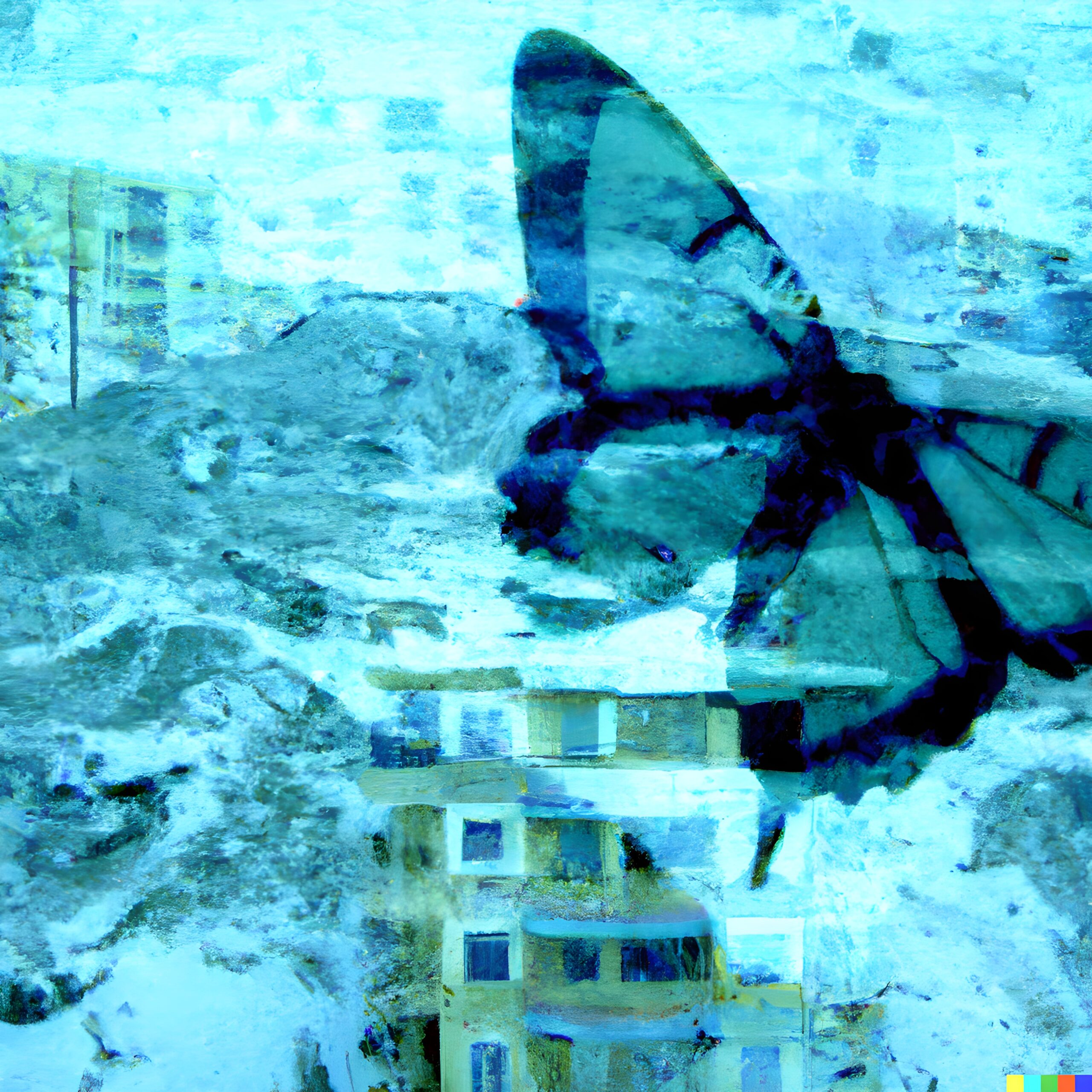
“double exposure photography of destroyed city of Bakhmut and blue butterfly, wide shot, make all elements sharp, wide-angle lens, in the style of Krzysztof Kieslowski from Three Colours: blue (1993)”
The blue butterfly is often seen as a symbol of gentleness, freedom and transformation. Its presence among the destroyed ruins of the city of Bachmut may suggest a desire for rebirth, rebuilding and the pursuit of freedom in the face of the destruction of war. The symbol alludes to the slogan of the French Revolution – freedom as the pursuit of independence, liberation and the fullness of life.
In Kieslowski’s Three Colours: Blue, the colour blue is the main leitmotif, symbolising freedom and liberation from the past. The blue butterfly and the destroyed ruins of the city of Bachmut are related to this film and its themes. Both elements point to the need to free oneself from the past, pain and limitations in order to achieve full freedom and rebirth.
The combination of the symbol of the blue butterfly, the destroyed ruins of the city of Bachmut, the slogan of the French Revolution and the film ‘Three Colours: Blue’, creates a complex composition that stimulates the imagination and encourages reflection on freedom and its meaning in the context of history, contemporary challenges and our own life journeys.
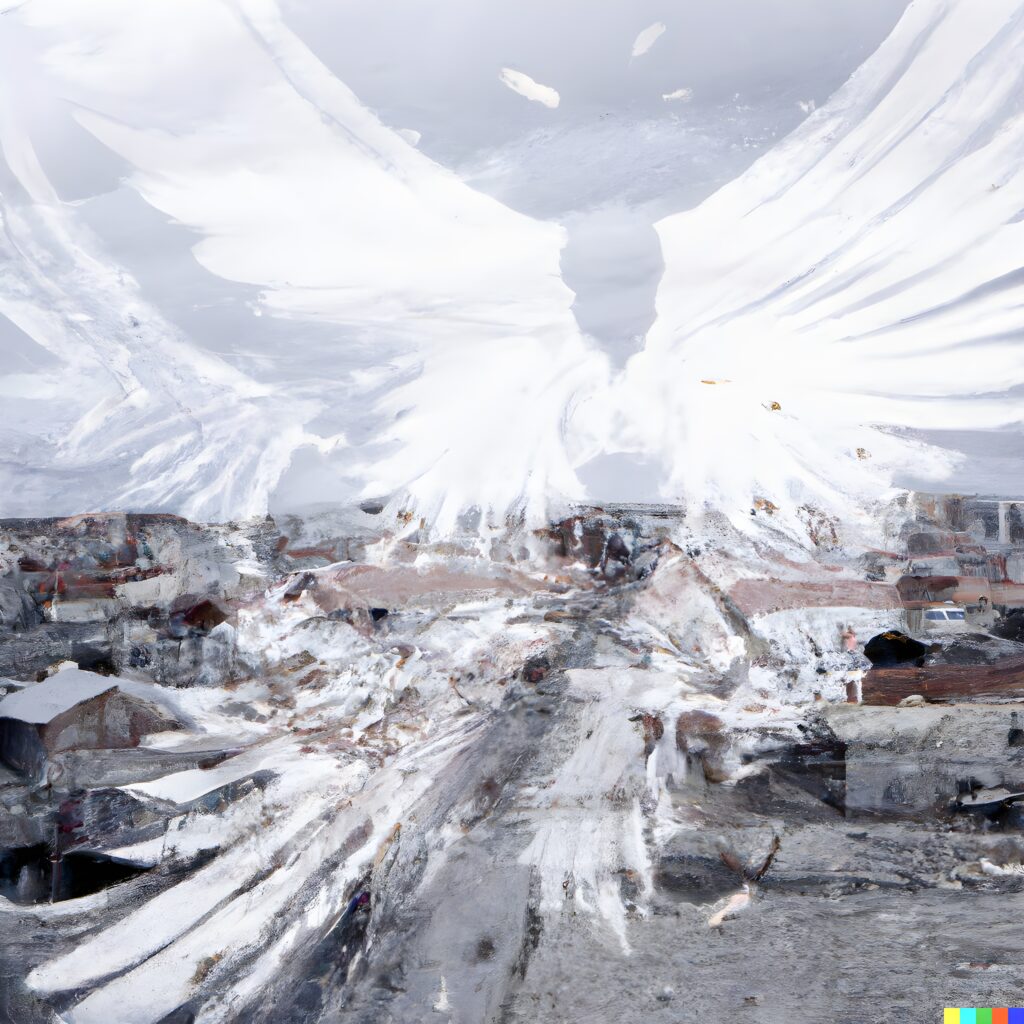
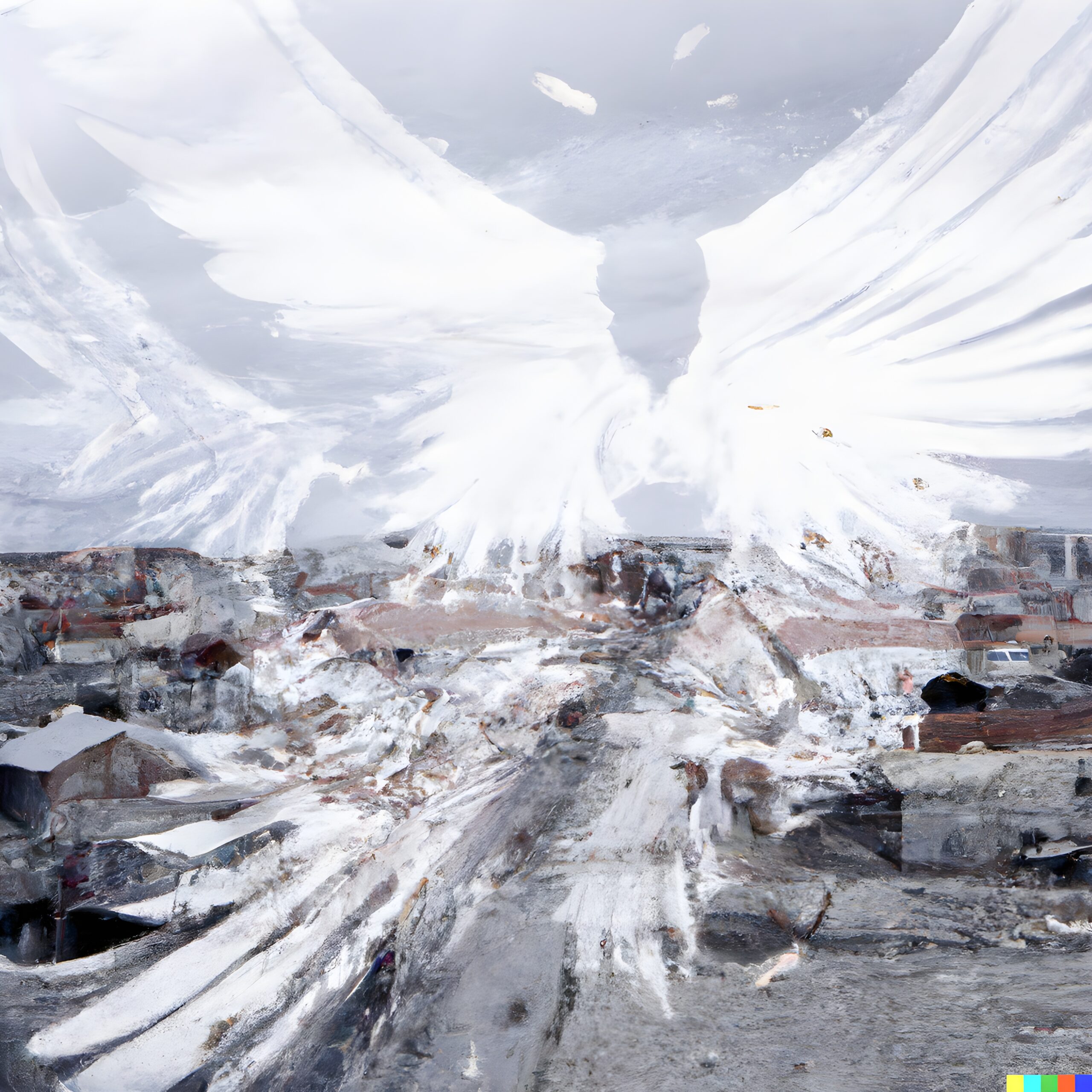
“double exposure photography of destroyed city of Bakhmut and a white wings of an angel, wide shot, make all elements sharp, wide-angle lens, in the style of Krzysztof Kieslowski from Three Colours: white (1994)”
White is often associated with purity, innocence and equality. The juxtaposition of the white angel symbol with the destroyed ruins of the city of Bachmut may indicate a desire for equality in the face of the destruction and inequality caused by war. The symbol refers to the French Revolution’s slogan of equality as an ideal that seeks equal opportunities, treatment and rights for all.
Kieslowski’s film Three Colours: White explores the theme of equality in a social and moral context. The combination of the symbol of the white angel with the destroyed ruins of the city of Bachmut is a reference to this film and its message. Both elements point to the need to fight inequality and strive for equality in the face of destruction and adversity.
The combination of the symbol of the white angel, the destroyed ruins of the city of Bachmut, the slogan of the French Revolution and the film ‘Three Colours: White’ creates a complex composition that stimulates the imagination and encourages reflection on equality and its meaning in the context of history, society and our own values.
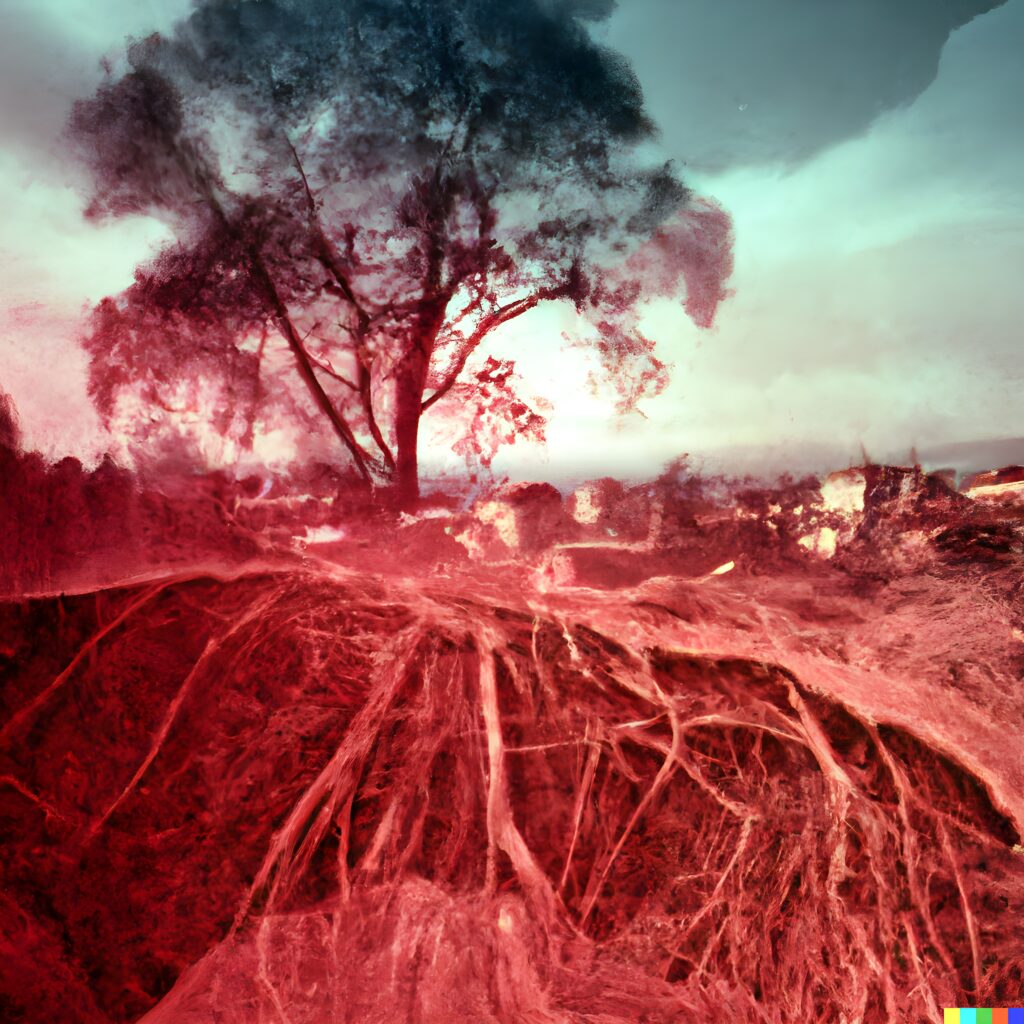
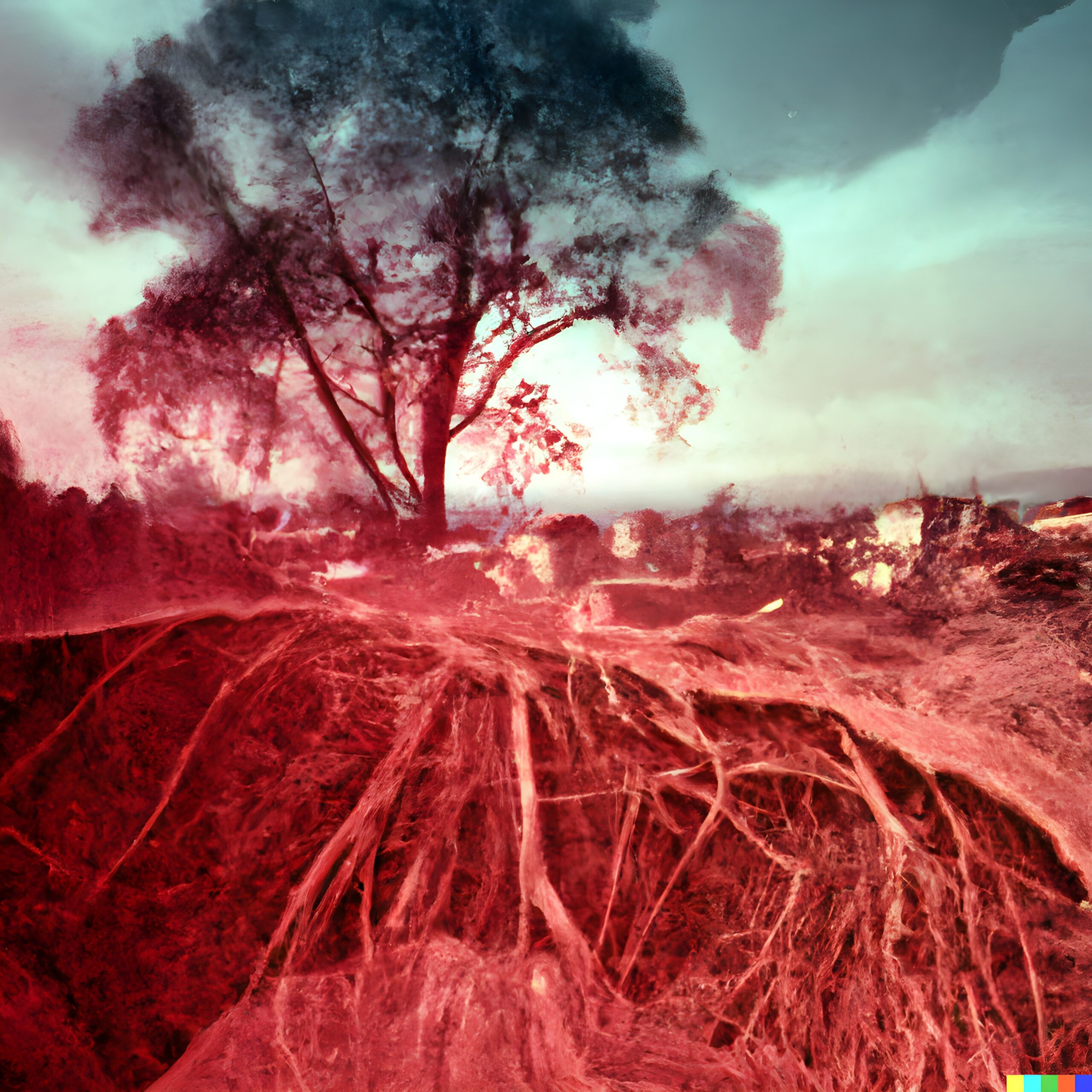
“double exposure photography of destroyed city of Bakhmut and a red massive tree with visible roots, wide shot, make all elements sharp, wide-angle lens, in the style of Krzysztof Kieslowski from Three Colours: red (1994)”
The tree symbolises strength, endurance and unity. The juxtaposition of the tree symbol with the destroyed ruins of the city of Bachmut in shades of red may indicate a desire for brotherhood and solidarity in the face of destruction and war. The symbol refers to the slogan of the French Revolution – fraternity as an idea of togetherness, mutual support and unity among people.
Kieslowski’s film Three Colours: Red explores the theme of fraternity and the connection between people in society. The combination of the symbol of a tree with the destroyed ruins of the town of Bachmut in red is a reference to the film and its message. Both elements point to the need for human connection, cooperation and solidarity in the face of destruction and torn societies.
The combination of the symbol of the tree, the destroyed ruins of the town of Bachmut, the slogan of the French Revolution and the film ‘Three Colours: Red’, creates a complex composition that stimulates the imagination and invites reflection on fraternity and its meaning in the context of history, contemporary challenges and our own relationships with others.
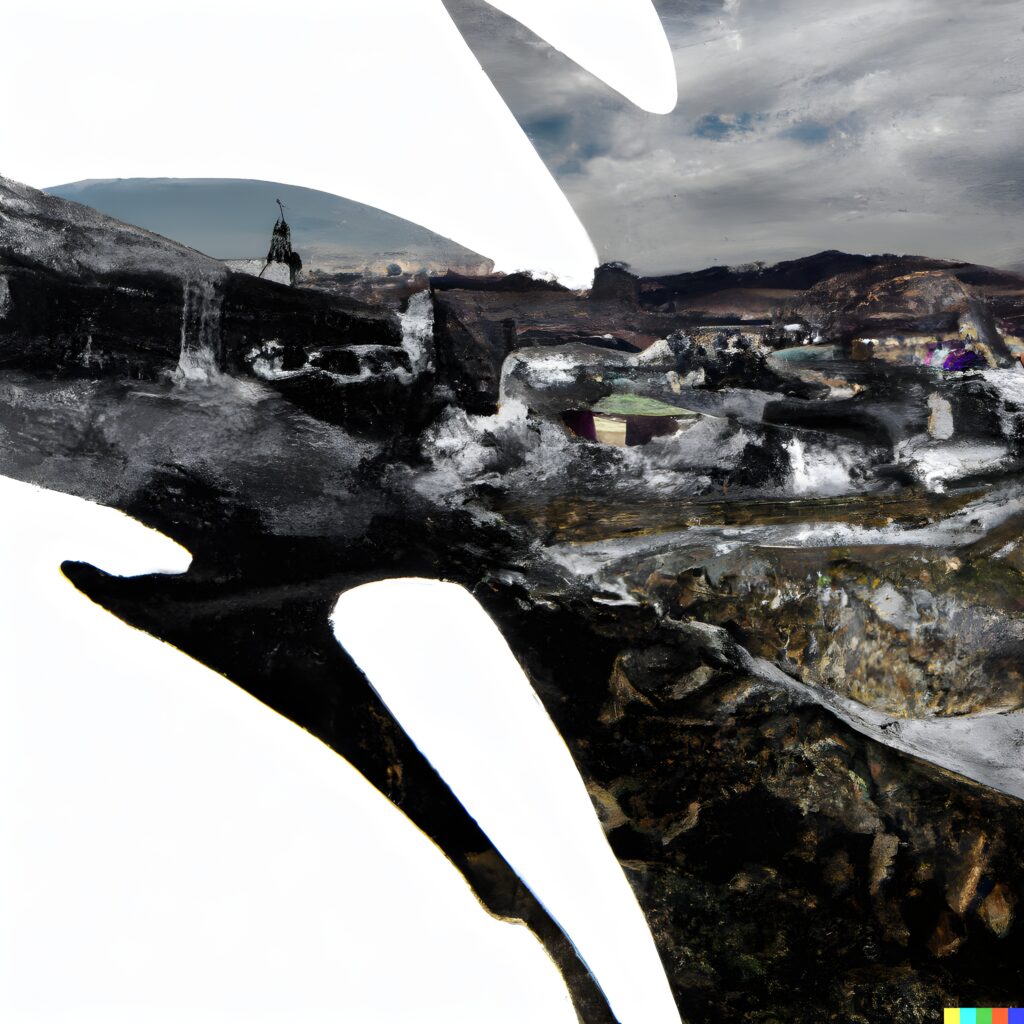
“double exposure photography of destroyed city of Bakhmut and a black death, wide shot, make all elements sharp, wide-angle lens, in the style of Krzysztof Kieslowski from Three Colours”
The Black Death is a symbol associated with annihilation, irreversible end and loss. The juxtaposition of this symbol with the destroyed ruins of the city of Bachmut points to the inextricable link between violence, destruction and the idea of death. This addition to the slogan of the French Revolution, though often forgotten, is a reminder of the brutal reality that society can face in its quest for liberty, equality and fraternity.
Kieslowski’s ‘Three Colours’ trilogy explores profound themes of human life and social conditions. The combination of the symbol of the Black Death with the destroyed ruins of the city of Bachmut is a reference to this film trilogy and its messages. Both point to the existence of darker aspects of life that contrast and challenge the ideals of the French Revolution and remind us of the difficult choices and sacrifices that may be inevitable in the struggle for liberty, equality and fraternity.
The combination of the symbol of the Black Death, the ruins of the city of Bachmut, the forgotten addition to the slogan of the French Revolution and the “Three Colours” trilogy creates a complex composition that stimulates reflection and raises difficult questions about the nature of human existence, values and the consequences of actions in the context of the modern world.
The use of the double exposure technique in the series of photographs, in which images of the destroyed city of Bachmut (as a symbol of that war) are interspersed with symbols alluding to the slogans of the French Revolution, aims to create a strong contrast and a deeper artistic message.
The double exposure allows two different images to be combined into one, creating a new level of meaning and connection between them. The interweaving of the leveled city of Bachmut with the symbols of the slogans of the French Revolution creates a strong comparison between the brutality of war and the ideals of liberty, equality and fraternity.
This technique highlights the destruction and devastation caused by war, while also emphasising the importance of the ideas of the French Revolution as a potential remedy for such suffering. The interweaving of these two elements in the paintings is intended to provoke reflection on the contrast between ideals and reality, and the need for action to make these values more present in the contemporary world.
The use of symbols alluding to the slogans of the French Revolution, combined with images of the destroyed city of Bachmut, is intended to evoke empathy and interest in the audience. This juxtaposition points to the universality and permanence of these values, which are still relevant in the context of contemporary conflicts.
The dual display allows for a creative exploration of the relationship between visual elements, including between images of destruction and symbols of the French Revolution. This tool is intended to enable the expression of complexity and ambiguity, and to stimulate the imagination and interpretation of the viewer.
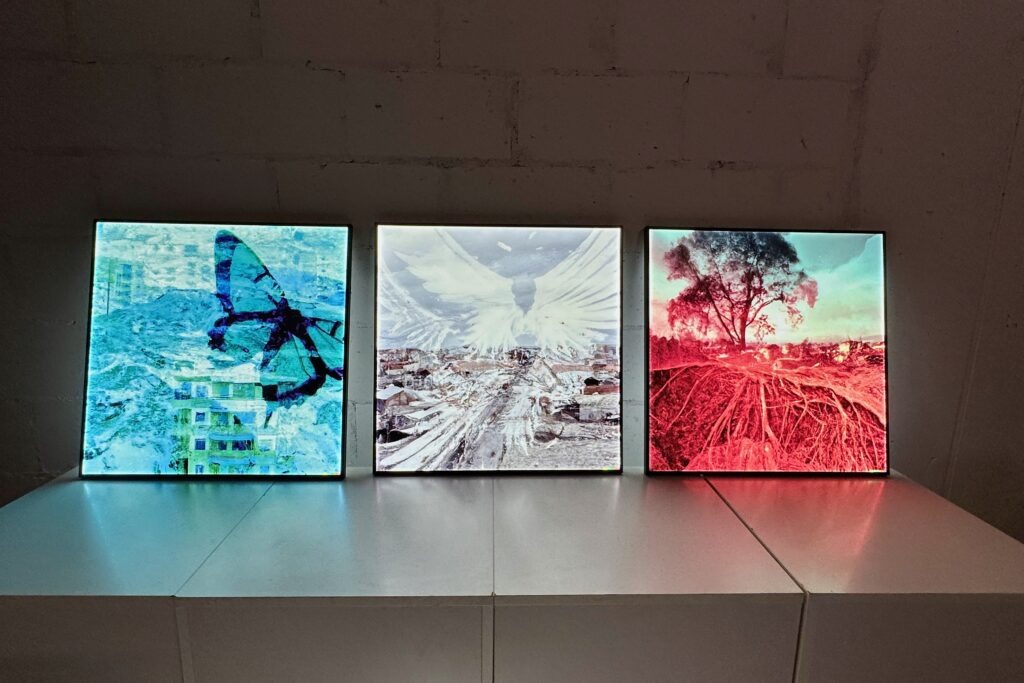 Light is often a symbol of optimism, strength and hope. In the case of this series of photographs, where the images are presented as semi-transparent layers through which light passes, the emphasis is on the relevance of hope, even in the face of the hardship and destruction represented by the destroyed ruins of the town of Bachmut.
The source of light adds an element of transcendence and spirituality to the images. It suggests the possibility of rebirth, regeneration and finding new strength in the face of adversity. Light symbolises hope for a better future and gives impetus to the pursuit of liberty, equality and fraternity, the central values of the slogans of the French Revolution.
By presenting the photographs as semi-transparent layers, the series emphasises the importance of hope as a driving force and inspiration. This visual combination of hope and harsh reality suggests that even in the darkest moments, clarity and perspective can be found.
In this way, light as a symbol of hope adds depth and optimism to the interpretation of the slogans of the French Revolution and fits into the context of hardship and destruction represented by the devastated ruins of the city of Bachmut.
The use of an AI image generator (DALL E) to prepare the ‘Three Colours 2.023’ series, which deals with complex issues in the contemporary world, including the slogans of the French Revolution, was a deliberate choice. It should allow the creative layer to explore the relationship between contemporary technology and artistic creation.
AI is a tool that can help artists push the boundaries of creativity and explore new possibilities in art making. An AI image generator can help create original and non-obvious compositions that can express deeper artistic messages. The introduction of modern technologies such as artificial intelligence into the creative process opens up new horizons for artists, allowing them to harness the potential of machine learning to generate and experiment with images. In addition, the use of AI can help to create artistic messages more quickly and efficiently, which is important when dealing with complex and multi-layered subjects such as the slogans of the French Revolution and their relevance in contemporary society.
The use of AI technology in artistic creation allows artists to explore the relationship between man and machine, to reflect on the impact of technology on our culture and society, and to create work that reflects today’s technological and digital context.
As a result, the use of an AI image generator in the photographic project allows a creative combination of traditional artistic techniques and modern technology, which can lead to new discoveries, interpretations and discussions on contemporary themes such as the timeless slogans of the French Revolution.
The content of this description has also been prepared using artificial intelligence tools (ChatGPT). The aim was to show how an AI algorithm can interpret, describe and synthesise a work whose ‘creator’ is another algorithm.
The Wielkopolska School’s postulate of not limiting the creative process by manual or workshop deficiencies can be linked to the current capabilities of artificial intelligence and AI image generators. Thanks to AI technology, artists have access to tools that allow them to explore and realise their artistic vision without the need for high manual skills.
The Wielkopolska School, an ‘art group’, was established in Lodz in the second half of the 1990s. It was formed by students of the Faculty of Law and Administration of the University of Lodz, who, in addition to (or rather instead of) their studies, passionately devoted themselves to the creative process in various areas of the visual arts, including drawing, painting and sculpture, during exam periods. What the young artists lacked in manual skills and workshop preparation, they made up for by interpreting their works after they had been physically created. Such classics as ‘The Wild Vira‘ and ‘King Lear or the Quasi-Crocodile‘ were created. The direction of art they practised was ironically referred to by them as sessionism, after the examination session, the period in which they created. (As is well known, during the session all activities seem more attractive than hard study). The name of the Wielkopolska School comes from Wielkopolska Street in Lodz, where the group was based.
The AI Image Generator enables artists to create new, original and unexpected compositions that can serve as the basis for further interpretation and artistic development. In this way, even people without advanced manual or workshop skills can explore and express their creativity in various fields of the visual arts.
Similar to the Wielkopolska School artists who compensated for their manual deficiencies by interpreting their work, artists using AI image generators can focus on interpreting and developing their artistic message regardless of their workshop limitations. This makes the creative process freer and more open to experimentation.
In this way, the contemporary possibilities of artificial intelligence and AI image generators are part of the postulate of the Greater School, giving artists new tools to express their work, regardless of their manual skills. AI technology becomes a tool that opens up new possibilities for artistic expression and the exploration of one’s own vision.